
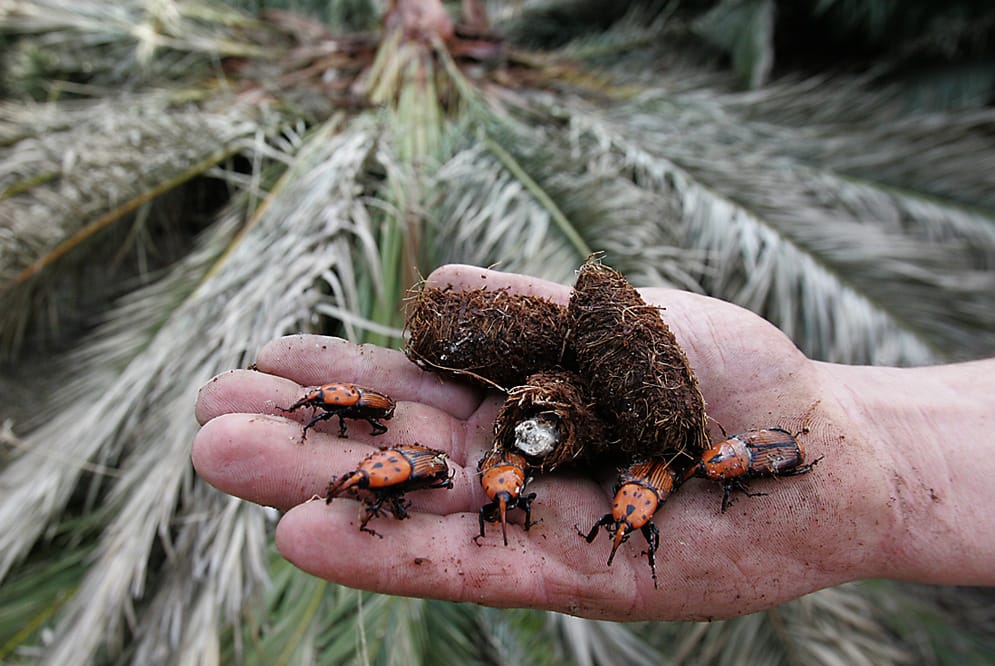
If you've spotted signs of red palm weevil in one of your palms, the first question is always the same: can it be saved, or does it need to come down?
The honest answer depends on how far the infestation has progressed. This article explains the treatment options available, what they can and cannot do, and how to make the right call before it's too late.
Why early detection matters so much
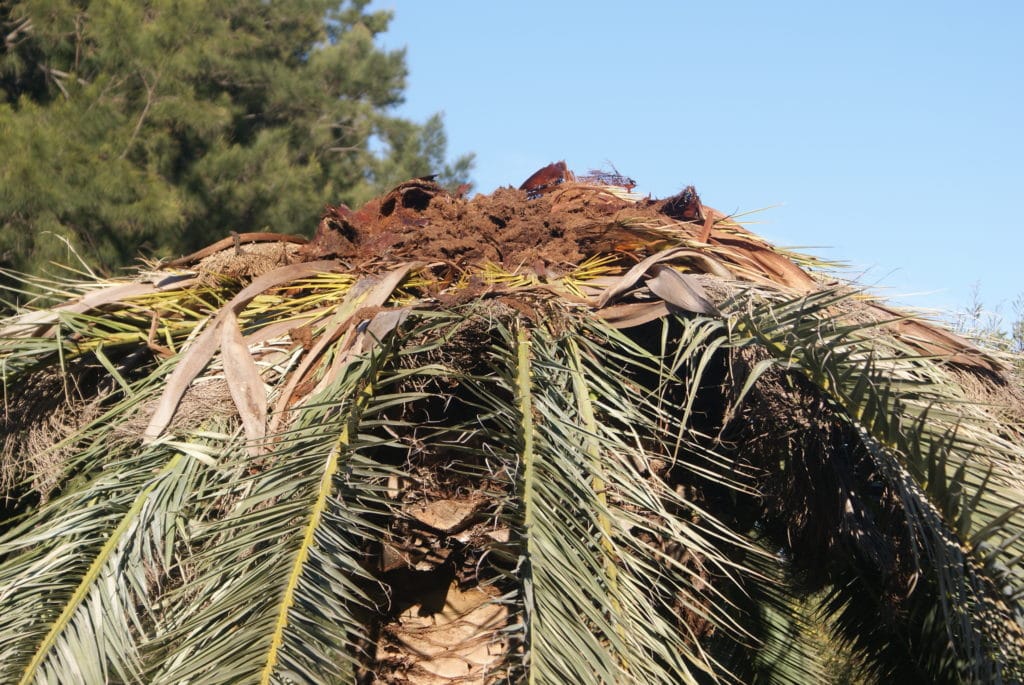
Red palm weevil (Rhynchophorus ferrugineus) is almost always fatal to an infested palm if left untreated. The larvae feed on the internal tissue of the crown, destroying the growing point of the palm from the inside. By the time visible symptoms appear — drooping fronds, a collapsed crown, sawdust-like residue at the base — the infestation is often already advanced.
This is why we always say: if you suspect something is wrong, don't wait. An early-stage infestation can sometimes be treated successfully. A late-stage one almost never can.
Treatment options
Trunk injection treatment
The most effective method for early to mid-stage infestations. Insecticide is injected directly into the trunk, reaching the larvae inside the palm without relying on surface absorption. This method is used by professional operators and requires the right product, dosage and timing to be effective.
Treatment typically needs to be repeated at intervals — a single application is rarely sufficient. We assess each palm individually before recommending a treatment schedule.
Preventive treatment
If you have healthy palms and a neighbour or nearby palm has been confirmed as infested, preventive treatment is strongly recommended. Red palm weevil spreads rapidly between palms — a confirmed case nearby is a risk to every other palm in the vicinity.
Preventive injection or foliar treatment can significantly reduce the risk of infestation taking hold in healthy palms.
When treatment is not enough
If the crown has already collapsed, or the internal damage is too extensive, treatment will not save the palm. In these cases, removal is the only realistic option — both to eliminate the remaining larvae and to protect neighbouring palms from further spread.
We will always give you an honest assessment. If a palm cannot realistically be saved, we will tell you directly rather than recommend treatment that won't work.
What to do if you suspect red palm weevil
- Don't prune the palm yourself — cutting into an infested crown can spread larvae and accelerate the damage
- Send us a photo on WhatsApp — we can often give an initial assessment from photos before visiting in person
- Check neighbouring palms — if one palm is infested, others nearby are at risk and should be inspected
- Act quickly — the difference between a treatable and untreatable infestation is often just a matter of weeks
Removal of infested palms
If removal is necessary, the process needs to be handled carefully to avoid spreading larvae to the surrounding area. We carry out infested palm removal across the Costa del Sol, disposing of material responsibly and advising on the risk to neighbouring palms.
You can find more information on our palm tree removal in Marbella page, or contact us directly for your specific area.
A note on permits
Removal of a palm affected by red palm weevil may qualify for expedited permit processing given the disease risk involved — but you should still check with your local ayuntamiento before proceeding. Our guide to tree removal permits in Málaga explains the general rules.
Get a free assessment
If you've noticed symptoms or want a preventive check on your palms, message us on WhatsApp with a photo and your location. We'll come back to you the same day where possible.
We hope we have answered your questions and that we can be your chosen provider for Red Palm Weevil Treatment on the Costa del Sol.